5 Things Robinhood's CEO Just Said About Ethereum and the Crypto Market
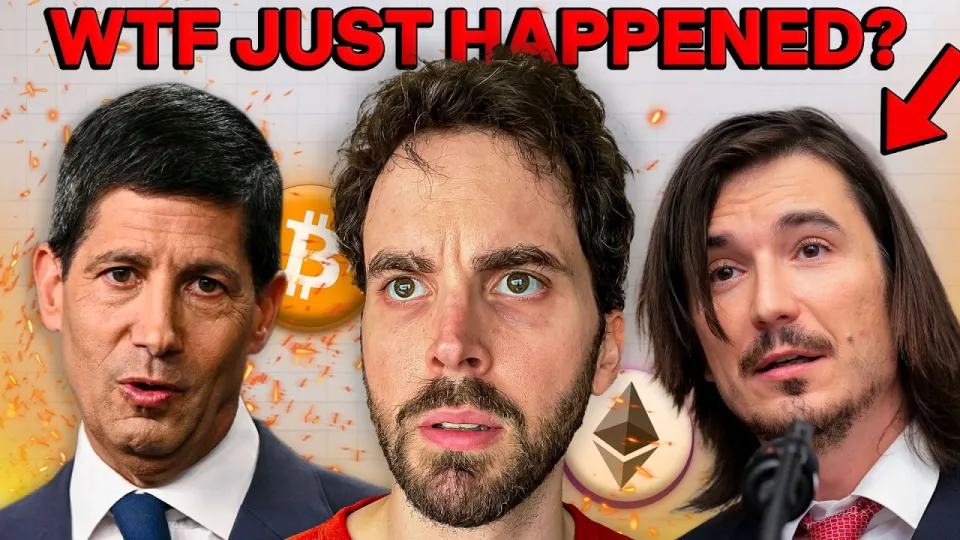
Video: Uh Oh, Robinhood CEO just said this about ethereum
Need articles like this for your video? They help promote it on YouTube and Google — order them in the Telegram bot @sat_sit_bot. The bot writes and publishes the articles itself (with your YouTube video embedded) on popular topical websites (no ads). Free trial — 50 articles.
· based on the channel Altcoin Daily
Key takeaways
- Robinhood CEO Vlad Tenev said to expect the company's involvement in the developer ecosystem and the global onchain community to ramp up, which the market read as an Ethereum-adjacent signal.
- The Fed left rates unchanged at the October 2026 meeting, and Bitcoin traded slightly higher after the decision.
- Anthropic's IPO is reported to be targeted for mid-November, a potential sentiment catalyst for AI-linked crypto tokens.
- Google unveiled a new crypto security system aimed at wallet and key protection.
- Strategy (MicroStrategy) approved daily dividends on its preferred stock, a change from its previous quarterly schedule.
Robinhood CEO Vlad Tenev said the company's involvement in the developer ecosystem and the global onchain community will ramp up, a statement the crypto market read as an Ethereum-adjacent signal even though he did not name ETH directly. The remark landed alongside a Fed decision to leave rates unchanged and a small Bitcoin bounce, and it matters because Robinhood is one of the largest retail brokerage gateways into crypto. Traders who want to act on the news can open a Liquid account and claim the $25 deposit bonus plus a 10% trading fee reduction before positioning.
What exactly did the Robinhood CEO say about Ethereum?
The substance of the comment is about infrastructure and builders, not a price call. Tenev framed Robinhood's next phase around two things: the developer ecosystem and the global onchain community. That is the language of a company that wants to be where applications are built and where users transact, and Ethereum remains the largest venue for both, with the deepest pool of developers, the most deployed smart contracts and the bulk of tokenized real-world assets and stablecoin settlement.
Here is why the market treated it as an Ethereum signal rather than generic crypto enthusiasm:
- Robinhood already runs a self-custody wallet and offers staking and token listings, so a push into the developer layer implies more onchain surface area, not just more order flow.
- "Global onchain community" points at non-US users, and Ethereum layer-2 networks are the cheapest route to reach them.
- The company's stock (HOOD) trades as a proxy for retail crypto activity, so any expansion comment moves both HOOD and ETH sentiment.
Note the caveat that some viewers raised: the phrasing was about developers and the onchain community, not a literal commitment to Ethereum the asset. Treat it as a directional hint about where Robinhood is building, not a guarantee of ETH price action.
Why the Fed hold and the Bitcoin reaction matter for crypto
The Fed left rates unchanged at its October 2026 meeting, and Bitcoin edged higher after the announcement. A hold is not a cut, but it removes the immediate risk of a hawkish surprise, and crypto has been trading as a liquidity-sensitive asset for years. When the policy path stops getting tighter, risk appetite tends to improve at the margin.
The practical read for traders:
- Bitcoin's reaction was modest, which suggests the decision was largely priced in.
- Rate-sensitive names, including crypto-linked equities such as HOOD and COIN, typically react harder than spot BTC on Fed days.
- The next catalyst is the language around future meetings, not the hold itself. Watch inflation prints, especially core measures, since headline figures are distorted by energy and food swings.
For anyone running a portfolio, the takeaway is that macro is still the dominant driver of short-term direction, while company-level news like Robinhood's comments shapes which assets outperform within crypto.
Anthropic's IPO timing and the AI token trade
Anthropic's IPO is reported to be targeted for mid-November, and that date is a sentiment event for AI-adjacent crypto assets. A large, well-known AI company listing on public markets gives institutional investors a benchmark for the sector and often pulls attention toward tokens tied to decentralized compute, model training and data markets.
What to watch:
- Whether the listing prices strongly, which historically lifts risk appetite across AI narratives.
- Whether capital rotates from AI equities into AI tokens, or the opposite, as happened in several earlier cycles when public-market exposure cannibalized token demand.
- Liquidity in smaller AI tokens, which tends to thin out fast when the headline fades.
AI tokens are high-beta instruments. A strong IPO can produce a multi-day rally, but the move usually front-runs the event and fades after the debut.
Google's new crypto security system and what it changes for self-custody
Google unveiled a new crypto security system aimed at protecting wallets and private keys, extending its push into blockchain infrastructure. The relevance is straightforward: the biggest barrier to self-custody adoption is fear of losing funds to phishing, malware and key theft, and a major cloud and identity provider entering that space raises the baseline for everyone.
For users, the practical implications are:
- Expect stronger identity and key-management tooling to be bundled into existing Google accounts and cloud services.
- Expect more phishing attempts disguised as security upgrades, since attackers follow the headlines.
- Keep hardware wallets for meaningful balances; a security layer from a tech giant is a complement to, not a replacement for, cold storage.
Strategy's daily dividend and the MicroStrategy comparison
Strategy (formerly MicroStrategy) approved daily dividends on its preferred stock, a shift from the quarterly schedule the company used before. The change increases the cadence of cash obligations tied to its capital structure while the company keeps accumulating Bitcoin.
Why it draws scrutiny:
- Paying distributions more frequently raises the effective cost of capital and puts more pressure on the company's cash flow.
- The structure increasingly resembles a yield-bearing vehicle layered on top of a volatile asset, which is why some market participants compare it to earlier high-yield crypto schemes.
- Strategy now has multiple listed instruments, which dilutes the simplicity of the original "buy MSTR for Bitcoin exposure" thesis.
None of this means the model is broken, but investors should read the preferred terms rather than assume the common stock is a clean Bitcoin proxy.
Common viewer questions about the Robinhood Ethereum news
The most frequent pushback on this story is about interpretation rather than facts. Three themes come up repeatedly.
First, wording. Viewers point out that the CEO talked about the developer ecosystem and the onchain community rather than Ethereum by name, so the ETH connection is an inference. That is fair, and it is why the signal should be weighted as directional.
Second, timing. Retail traders want to know whether this is a buy signal now or a setup for later. Company strategy comments play out over quarters, while price moves happen in days, so the two should be traded on different timeframes.
Third, trust. Some viewers are skeptical of Robinhood as a company regardless of its crypto ambitions, citing past outages and product decisions. That skepticism is a legitimate risk factor: execution matters more than announcements.
All links from the video
- Liquid registration with $25 deposit bonus and 10% fee reduction
- Altcoin Daily on X
- Liquid on X
- WEEX AI Wars hackathon, $600K prize pool
- Bitunix registration with bonus
The bottom line on Robinhood, Ethereum and this news cycle
Robinhood's CEO signaled that the company intends to go deeper into the developer ecosystem and the global onchain community, which is a structural positive for Ethereum and its layer-2 networks even without a direct mention of ETH. The Fed's decision to hold rates steady gave risk assets room to breathe, Bitcoin ticked higher, and the pipeline of catalysts, from Anthropic's mid-November IPO to Google's crypto security push, keeps the sector busy. Strategy's move to daily dividends on preferred stock is a reminder that leverage and yield structures deserve careful reading. Altcoin Daily breaks down all of these developments in the video above and is a solid starting point for following the news flow. If you plan to trade any of it, claim the Liquid deposit bonus and fee reduction first, and size positions as if every headline can cut both ways.
Questions & answers
Did Robinhood's CEO actually say anything about Ethereum specifically?
Not by name. The comment referenced ramping up involvement in the developer ecosystem and the global onchain community. The Ethereum read is an inference based on where most developers and onchain activity sit, so treat it as a directional signal rather than a direct endorsement of ETH.
Is a Fed rate hold bullish for Bitcoin?
A hold is neutral-to-mildly positive because it removes the risk of further tightening. Bitcoin's move after the October 2026 decision was small, suggesting the outcome was priced in. The bigger driver is forward guidance and core inflation data.
Why would Anthropic's IPO affect crypto prices?
A large AI listing gives institutions a public benchmark for the AI sector and often shifts attention toward AI-linked tokens. The effect can run both ways: a strong debut can lift AI token demand, while attractive equity exposure can pull capital away from smaller tokens.
Does Google's crypto security system make hardware wallets unnecessary?
No. A security layer from a major tech company improves identity and key management for mainstream users, but it does not remove counterparty and account-recovery risk. Hardware wallets remain the standard for storing meaningful balances.
Source: Uh Oh, Robinhood CEO just said this about ethereum · Markdown version